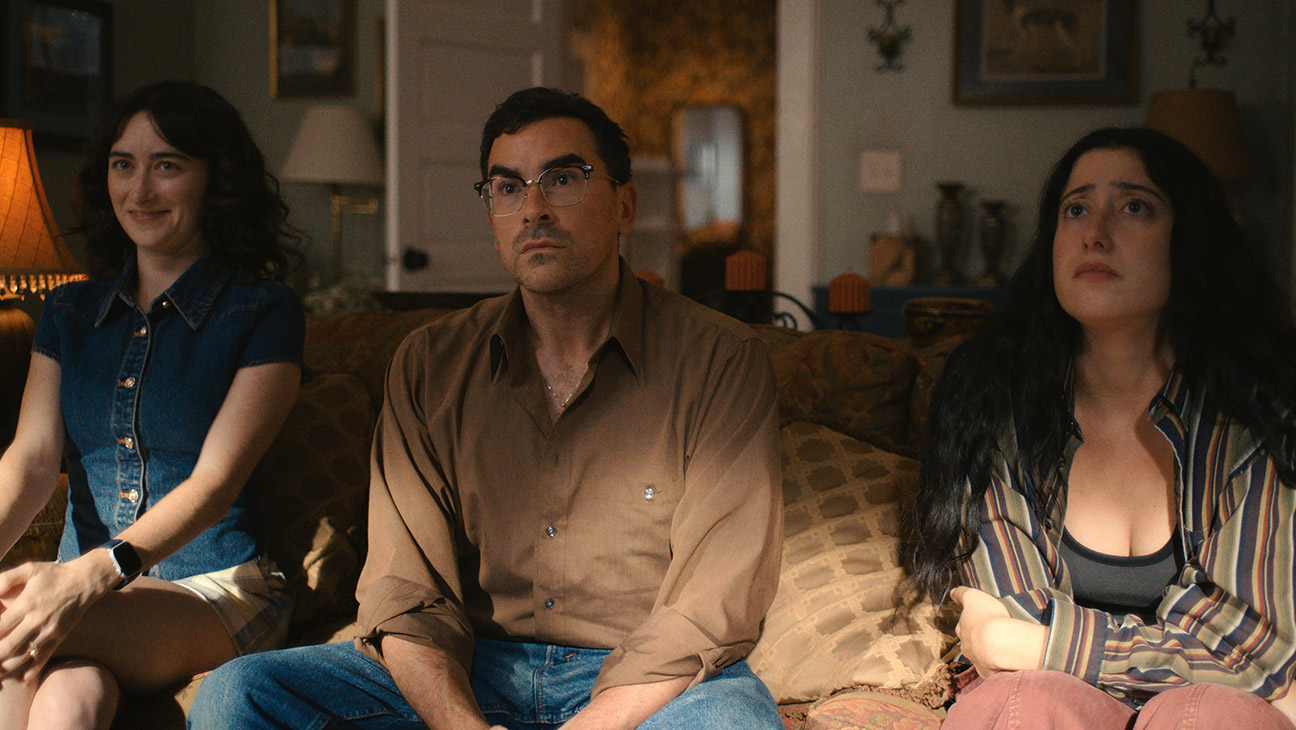
Dan Levy's Bold New Chapter: An In-Depth Look at 'Big Mistakes'
Ten years ago, Dan Levy, alongside his father Eugene Levy, captivated audiences worldwide with the heartwarming, character-driven comedy, Schitt's Creek. What began as a quiet Canadian series blossomed into a global phenomenon, achieving cult classic status and sweeping awards for its unique blend of wit, warmth, and profound humanity. Now, Levy is back, but not with a familiar cozy comfort. His latest venture, Big Mistakes, co-created with the acclaimed Rachel Sennott, marks a dramatic and, at times, startling departure, inviting viewers into a world far removed from the idyllic charm of the Rose family's journey. For those seeking comprehensive Big Mistakes Reviews, prepare for a show that defies expectations and actively dismantles the very idea of a safe return.
Big Mistakes isn't just a new series; it's a statement. It’s Levy stepping out from the shadow of his previous success to explore uncharted, darker comedic territory. This is not the wholesome, often tear-jerking comedy that defined Schitt's Creek. Instead, Levy plunges headfirst into a chaotic crime-comedy, a genre-bending narrative that weaves together generational trauma, dysfunctional family dynamics, and the terrifying snowball effect of a single, ill-advised choice. Initial Big Mistakes reviews are quick to highlight its unhinged tone and relentless pace, suggesting a viewing experience that is both exhilarating and, at times, deliberately uncomfortable. This article delves deep into what makes Big Mistakes a significant — and perhaps polarizing — entry in Levy's career.
From Creek to Chaos: A Radical Reinvention of Tone and Genre
The immediate and most striking aspect of Big Mistakes is its stark contrast to Schitt's Creek. Where the latter explored a family finding connection and love amidst financial ruin in a charming small town, Levy's new series flips that concept on its head. Set in suburban New Jersey, Big Mistakes follows an ordinary family whose lives spiral out of control due to a series of increasingly poor choices. The show embraces an "unhinged and unflinching" sensibility, a tone masterfully influenced by co-creator Rachel Sennott, whose previous work like Shiva Baby is known for its intense, anxiety-inducing realism.
This isn't just a shift in setting; it's a complete genre overhaul. While complicated family dynamics remain at its core, Big Mistakes trades gentle humor for action-packed sequences, suspenseful crime thriller elements, and moments that are genuinely unsettling. The pace is breakneck, operating at a speed that would undoubtedly violate traffic laws in Schitt's Creek. This deliberate choice challenges audience expectations, forcing viewers to adjust to a world where humor is often derived from desperate circumstances and mounting dread, rather than witty banter or heartwarming resolutions. If you're searching for Big Mistakes Reviews to gauge its similarity to Levy's past work, be warned: this show is a deliberate move away from it.
The Tangled Web of 'Big Mistakes': Plot, Characters, and Unforeseen Consequences
At the heart of Big Mistakes are the aimless siblings Nicky (Dan Levy) and Morgan (Taylor Ortega), who find themselves unwittingly entangled in the sprawling criminal underworld of New Jersey. Their journey begins innocently enough – or so it seems – when Morgan shoplifts a diamond necklace, a misguided attempt to bring comfort to their dying grandmother. This single act of desperation ignites a chain reaction, pulling them deeper into organized crime with each subsequent panicked decision.
- Nicky (Dan Levy): A well-meaning but tightly wound pastor at a local church, Nicky embodies self-sacrifice. His patrons' lack of boundaries often leads him to prioritize others' needs over his own happiness, creating a fertile ground for internal conflict when his life takes a criminal turn. He also harbors a secret relationship that could unravel his carefully constructed life.
- Morgan (Taylor Ortega): The sarcastic middle child, Morgan's sharp tongue often masks a deep dissatisfaction with her life. Stagnating in an uncomfortable relationship and a failed attempt to escape her small town, her impulsive nature serves as the initial catalyst for the show's central conflict.
While Nicky and Morgan grapple with their increasingly outlandish criminal escapades, their equally ambitious mother, Linda (Laurie Metcalf), and obnoxiously perfect younger sister, Natalie (Abby Quinn), are busy launching Linda's mayoral campaign. The genius of Big Mistakes lies in how it brilliantly blends these two seemingly disparate storylines. The criminal underworld's chaos frequently bleeds into the public-facing political ambitions, creating a unique comedic tension. The show highlights how ambition, in both its legal and illegal forms, can lead to moral compromises and unforeseen consequences, making the outlandish circumstances feel remarkably relatable.
The ensemble cast further enriches this chaotic narrative. Legendary heavy hitters like Elizabeth Perkins shine as Annette, an intense local real estate mogul with no time for fools, while up-and-comers like Jack Innanen play Max, Morgan's endearing yet frustrating man-child trust-fund boyfriend. Each character, regardless of their screen time, contributes to the spiraling dysfunction, anchoring the high-stakes plot with moments of genuine character-driven humor and pathos. As many Big Mistakes reviews will attest, the show's strength lies in its ability to juggle such a diverse set of personalities and plot threads.
Navigating the Chaos: Tone, Pacing, and the Art of Blending Genres
Big Mistakes operates with an unyielding tone from its very first moments. Co-creator Rachel Sennott's influence is palpable, echoing the intense, claustrophobic atmosphere seen in her film Shiva Baby. The series doesn't allow viewers much time to breathe, thrusting them directly into the frantic, often desperate situations faced by Nicky and Morgan. This relentless pacing is a deliberate artistic choice, designed to immerse the audience in the characters' growing panic and the feeling of constantly being one step behind.
The show's attempt to blend dysfunctional family comedy with a spiraling crime plot is its most ambitious – and perhaps most challenging – aspect. While the references note that the show "rarely finds the balance it’s chasing," this observation doesn't necessarily detract from its overall impact but rather highlights its experimental nature. The comedic elements are often dark, derived from the absurdity of the situations or the sheer incompetence of the characters trying to navigate a world they are utterly unprepared for. The suspense, meanwhile, is genuine, with real stakes and consequences that elevate it beyond mere slapstick. This intricate blend results in a viewing experience that is undoubtedly unique, if not always perfectly harmonious.
For viewers accustomed to more conventional genre boundaries, Big Mistakes might feel jarring. However, for those who appreciate a bold, boundary-pushing narrative that isn't afraid to be messy and uncomfortable, its chaotic charm is undeniable. It's a show that constantly keeps you on your toes, unsure whether to laugh, gasp, or simply watch in horrified fascination as the "mistakes" snowball into increasingly dire circumstances.
Why 'Big Mistakes' Matters: A Critical Look at Generational Trauma and Ambition
Beyond the surface-level crime and comedy, Big Mistakes is deeply rooted in themes of generational trauma, family dynamics, and the often-destructive pursuit of ambition. The "mistakes" made by Nicky and Morgan are not isolated incidents but are seemingly born from a legacy of family dysfunction and unmet expectations. Linda's micromanagement of her children, even in the face of her own mother's imminent death, speaks volumes about the pressures and roles placed upon each family member.
Levy uses the extreme circumstances of a crime thriller and a political campaign to explore relatable human struggles: the desire for escape, the burden of responsibility, the craving for acceptance, and the sacrifices made for family. Nicky's constant self-sacrifice for his church and Morgan's deep disappointment with her stagnant life are poignant explorations of how individuals grapple with identity and purpose within the confines of family expectations and small-town living. The show implicitly asks: at what point do we stop making excuses for our family, and when do we take responsibility for our own actions, even if those actions are born from a desire to help others?
Practical Tip for Viewers: To fully appreciate Big Mistakes, it's crucial to approach it without the lens of Schitt's Creek. Prepare for a show that is darker, faster, and more morally ambiguous. It demands a different kind of engagement, one that embraces discomfort and complexity. Levy and Sennott aren't trying to replicate past successes but rather forge a new path, and recognizing this intention is key to enjoying their bold vision. Engage with Big Mistakes Reviews that understand this shift.
Conclusion: Dan Levy's Audacious Leap into the Unforeseen
Big Mistakes stands as a testament to Dan Levy's artistic courage and willingness to challenge both himself and his audience. It is an audacious, often frenetic, and undeniably unique entry into the landscape of modern television. While some Big Mistakes Reviews might point to its occasionally uneven genre blend, its strengths lie in its sharp writing, memorable characters, and its fearless dive into the murky waters of family dysfunction, crime, and political ambition. It��s a show that will make you laugh, cringe, and ponder the cascading consequences of human error, proving that even the most well-meaning individuals can stumble into extraordinary trouble. If you’re ready for a wild ride that pushes boundaries and leaves the comfort zone far behind, Big Mistakes is certainly worth adding to your watchlist.